IceCap
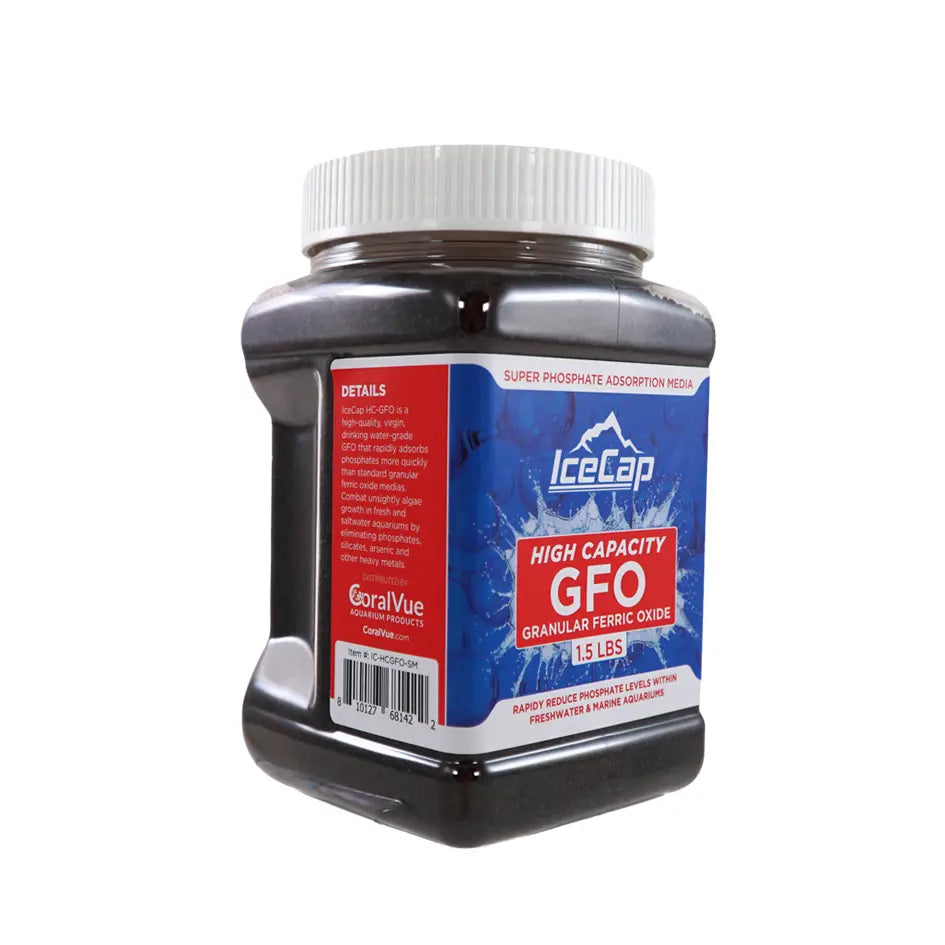
IceCap High-Capacity GFO, Small, 1.5 lb
IceCap High-Capacity GFO, Small, 1.5 lb
Image shown is for reference. Packaging may show a different size or pack quantity. Your order will contain the size or pack quantity stated in this product’s title and description.
Low stock: 2 left
Couldn't load pickup availability
Manage phosphate and dissolved silicate with IceCap High-Capacity Granular Ferric Oxide (GFO). This dense iron-oxide filtration media offers a compact option for nutrient management in marine and reef tanks, with hardened granules designed to resist abrasion during handling and proper reactor use.
Features
- Adsorbs orthophosphate and dissolved silicate from tank water.
- High-density iron-oxide granules for use in a suitable upflow media reactor or fine-mesh media bag.
- Abrasion-resistant structure helps reduce fines, but thorough rinsing is still required.
- Compact resealable jar for convenient storage between media changes.
What's Included
One resealable jar of IceCap High-Capacity GFO media, 1.5 lb net weight. Reactor, pump, media bags, and test equipment are not included.
Specifications
- Media type: High-density granular ferric oxide.
- Target compounds: Orthophosphate and dissolved silicate.
- Recommended starting dose: 0.5 grams per gallon of total system water volume.
- Replacement guidance: Every 6–8 weeks, or sooner if phosphate readings indicate the media is exhausted. Actual service life depends on nutrient load and water conditions.
Instructions and Precautions
- Calculate total system water volume and measure 0.5 grams of media per gallon. If existing phosphate is high, start with half this amount to limit a rapid nutrient reduction. Follow the directions supplied with your product.
- Load the media into a suitable upflow reactor or heavy-duty fine-mesh media bag. Follow the reactor manufacturer's installation guidance.
- Rinse thoroughly with RO/DI water to remove fines. For reactor rinsing, direct the output into a separate waste bucket until the water runs clear before returning the output to the sump. Do not direct the rinse water into the tank.
- Adjust reactor flow so only the top layer of the media bed gently moves or simmers. Avoid packing the media tightly or allowing aggressive tumbling, which can grind the granules and release fines.
- Monitor phosphate at least weekly with an appropriate low-range test kit and evaluate readings against the needs of your system. Check alkalinity shortly after adding fresh media.
- Replace the media every 6–8 weeks, or sooner if phosphate begins rising above your system's chosen target.
Flow matters: Insufficient flow can allow the media to clump and water to channel around it. Excessive flow can break down granules. Follow your reactor's guidance and maintain gentle movement at the surface of the media bed.
Avoid rapid nutrient changes. Do not treat a single phosphate reading as a universal target for every reef system. Monitor tank conditions and livestock when introducing or replacing media.
Product Support
If your filtration media arrives damaged or with compromised packaging, please contact us at salesandsupport@n8saltwaterandreef.com so we can review the issue. Follow all handling and usage instructions supplied with the product.
Share